Construction Site CCTV Security: How Cameras Verify Perimeter Alarms
Sensors raise the alarm; cameras decide what happens next. How construction site CCTV security verifies alerts and captures insurance-ready evidence.
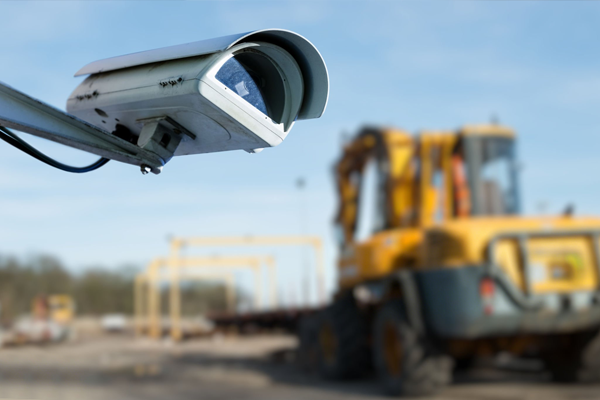
Construction sites are temporary, open, and expensive to leave unguarded. Excavators, copper cable, power tools, and stacked materials sit behind fencing that changes shape every few weeks, and on most sites almost no one is on the ground overnight. A perimeter alarm can tell you something moved. It cannot tell you whether to send a response team.
That gap between detection and decision is what this guide covers. It is the third part of our construction site perimeter security series: Part 1 covered the hardware architecture behind PIDS, and Part 2 examined the AI surveillance and ROI layer. This article focuses on the visual verification layer — the cameras that confirm what a sensor has detected, so every alarm becomes a decision instead of a guess.
What Makes Construction Sites Hard to Secure
Five characteristics separate a construction site from a finished building:
A perimeter that keeps moving. Fence lines and gate positions shift as project phases complete, so fixed detection coverage rarely stays accurate for long.
High-value assets left in the open. Machinery, copper wiring, and materials sit on site for weeks with limited physical protection.
Minimal overnight staffing. Guards cannot watch large, irregular boundaries continuously, and fatigue sets in fast.
Multiple uncontrolled entry points. Deliveries, subcontractors, and temporary haul roads create traffic that basic access control cannot track.
Liability exposure. Trespassers, vandals, and unauthorized equipment operators can cause injury, damage, and project delays that outlast the theft itself.
The full threat profile — including organized copper theft from energized infrastructure and unauthorized operation of heavy machinery — is covered in Part 1 of this series.
The Five Layers of a Complete Perimeter System
A working perimeter intrusion detection system stacks five layers, and each one compensates for the weaknesses of the last:
Physical barriers — temporary or permanent fencing, hoarding, and controlled gate points
Intrusion detection sensors — electric fencing, vibration cables, microwave barriers, and ground wire monitoring
Alarm and notification systems — audible alarms, flashing lights, and real-time alerts to phones
CCTV and video surveillance — the visual verification layer that turns a sensor event into confirmed intelligence
Central management platform — unified monitoring, recording, and event playback
Layers one through three are hardware decisions, and the technology trade-offs behind them are detailed in Part 1. The rest of this guide is about layer four, because it is the layer that determines whether your security team responds correctly at 2 a.m.
Function 1: Verifying Alarms Before You Dispatch
Vibration, cable, and microwave sensors cannot tell the difference between a person and a bird, a ladder and a loose panel in the wind. When every alert is treated as genuine, guards burn out on false dispatches, and real intrusions get lost in the noise.
Cameras resolve this in seconds. A supervisor opens the live view, sees that the movement at fence section 4 is a fox, and clears the alert — or sees a person with bolt cutters and escalates immediately. Visual verification is the single most effective way to reduce false alarms without lowering detection sensitivity.
Function 2: Real-Time Monitoring and Early Intervention
Modern site surveillance supports continuous coverage in conditions where guards cannot operate:
24/7 high-definition coverage, day and night
Infrared and starlight night vision for total darkness
Wide-angle and PTZ cameras covering long perimeters without blind spots
Remote and mobile viewing, so managers can check a site from anywhere
The operational value is timing. Climbing, cutting, or lifting a fence takes minutes, and cameras that show those actions as they begin give security the chance to intervene before material leaves the site.
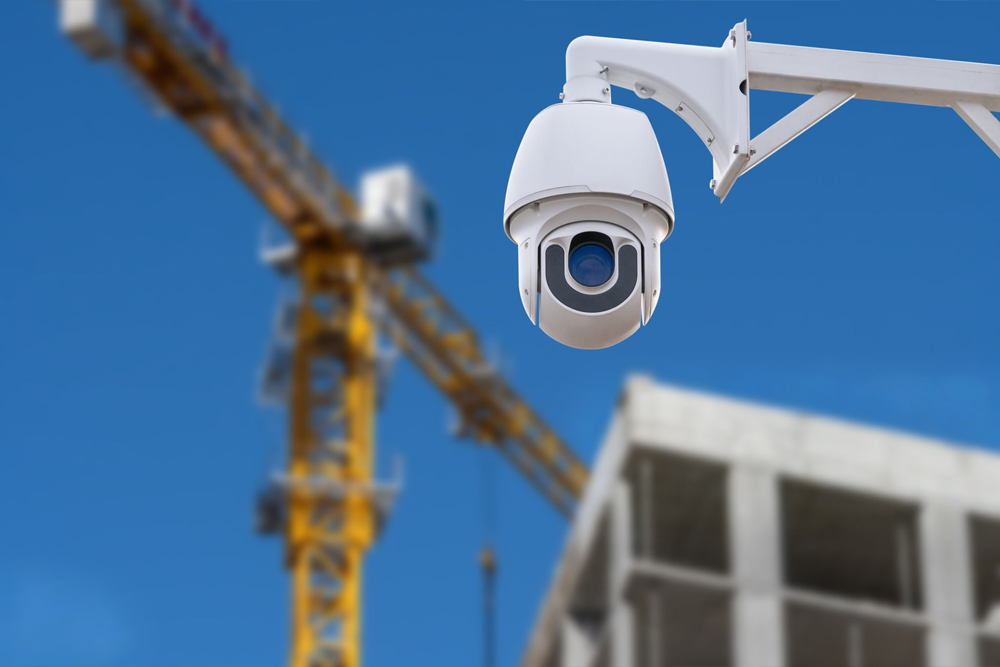
Function 3: AI Video Analytics That Separate Real Threats From Noise
Camera-side analytics do the first pass on every event, flagging behavior rather than mere motion:
Virtual line crossing detection
Object left behind or removed detection
Loitering detection near fences, gates, and storage zones
Unusual motion patterns around high-value equipment
These rules cut the volume of alerts a human has to review. During peak construction phases, a multi-camera site can generate hundreds of motion events a day; analytics reduce that to the handful that deserve attention.
This section covers what analytics do on the camera side. For how analytics feed predictive risk management and ROI modeling at the project level, see Part 2: AI Surveillance & Smart ROI.
Function 4: Evidence for Investigations and Insurance Claims
When theft or vandalism does occur, video decides what happens next. Footage supports:
Identification of intruders and vehicles
The time, location, and method of entry
Proof of which assets were taken or damaged
Documentation for police reports and insurance claims
This is where sites without usable video lose the most. Without a recording, a loss becomes an unverifiable claim — and unrecoverable cost.
Function 5: Site Safety and Operational Oversight
Perimeter cameras earn their place in operations, not only in security:
Monitoring access for workers, contractors, and visitors
Spotting unauthorized personnel in hazardous zones
Discouraging unsafe behavior and improving compliance
Providing records for safety audits and incident reviews
How the Closed Loop Works
In a complete system, cameras do not run in parallel with sensors — they run inside the same response chain:
A sensor detects a disturbance along the perimeter
The alarm activates and sends an instant notification
The nearest camera turns to the breach zone
Security verifies the threat on live video
Audio warnings, lights, or siren outputs are triggered
The incident is recorded for investigation and compliance
Each step shortens the next. The result is a response that is faster than a patrol and better documented than a guard's logbook.
Where Phyvision fits. Phyvision builds the camera layer for exactly this kind of closed-loop site security — perimeter-grade PTZ, bullet, and solar-powered 4G cameras designed for temporary and outdoor deployments, with OEM/ODM support for distributors and integrators.
What a CCTV-Centric Perimeter System Delivers
Higher detection accuracy without more false alarm dispatches
Lower guarding cost, because patrols shift from constant to targeted
Faster response through visual confirmation
Round-the-clock protection of high-value assets
Reduced theft, vandalism, and liability exposure
Stronger insurance claims backed by recorded evidence
Coverage that adapts as the site layout changes
FAQ
Q1: What role do CCTV cameras actually play in construction site perimeter security?
Cameras are the verification layer. Sensors raise a flag; cameras confirm whether the flag is real, show what is happening, and produce the record that follows the incident through investigation and claims.
Q2: How do cameras reduce false intrusion alarms?
Wind, animals, debris, and passing traffic all trigger perimeter sensors. Live video lets staff check an event in seconds and dismiss disturbances that are not intrusions, which keeps patrol resources available for genuine breaches.
Q3: Can site cameras maintain clear images around the clock?
Professional site cameras pair infrared and starlight sensors to hold usable detail through daylight, dusk, and total darkness, so perimeter coverage does not depend on lighting conditions.
Q4: Is a perimeter detection system better than relying on security guards alone?
Guards cannot watch large areas continuously without fatigue. An integrated system with automatic camera coverage works around the clock, holds consistent coverage across blind zones, and escalates events to staff faster than a walking patrol.
Q5: Can footage be used for insurance claims and incident investigation?
Yes. Recorded video establishes the time, method, and scale of a loss, which is what insurers and investigators need to process a claim or confirm responsibility.
The Bottom Line
A complete perimeter intrusion detection system is only as good as its verification layer. Physical barriers and sensors are the first line of defense, but without a camera confirming what they detect, every alert stays an open question — and open questions cost response time, false dispatches, and unverifiable losses.
Cameras are what make the system accountable: they prove what happened, show who was responsible, and give a project the evidence it needs to recover. Whether you are specifying a new site or upgrading coverage on an active one, the visual layer is where the return on the rest of your security investment is decided.
Planning perimeter protection for a construction project? Request a quote and our team will walk you through camera selection for your site layout.